
Laboratory services
Every sound design
starts as a sample.
Comprehensive solid fuel analysis for biomass, residues and refuse-derived fuels — complete characterization with gasification suitability certification and technical consultation.
Analyses
Proximate · ultimate
Energy
GCV · NCV
Ash
Fusion · XRF
Turnaround
Defined per scope
Fuel characterization, complete.
Four analysis packages cover the full thermal characterization of solid fuels. Each can be commissioned alone or as a complete suitability programme.
Results are reported with measurement uncertainty, assessed against thermal conversion requirements and translated into process-relevant conclusions — not just a data sheet.
Proximate Analysis
Moisture · Ash · Volatile matter · Fixed carbon
The first gate for any thermal project: the four-value fingerprint that determines handling behaviour, combustion profile and preliminary gasification performance.
| Parameter | Detail | Method |
|---|---|---|
| Moisture content | Total moisture as received | ISO 18134 |
| Ash content | Residual mineral mass after oxidation | ISO 18122 |
| Volatile matter | Thermally released fraction | ISO 18123 |
| Fixed carbon | Determined by difference | — |
Ultimate Analysis
C · H · N · S · O · Cl
Elemental composition that drives stoichiometry, emissions modelling and downstream syngas chemistry — the basis for process design calculations.
| Parameter | Detail | Method |
|---|---|---|
| Carbon (C) | Elemental carbon fraction | ISO 16948 |
| Hydrogen (H) | Elemental hydrogen fraction | ISO 16948 |
| Nitrogen (N) | Fuel-bound nitrogen, NOx precursor | ISO 16948 |
| Sulfur (S) | SO₂ precursor | ISO 16967 |
| Chlorine (Cl) | Corrosion & dioxin pathway indicator | ISO 16967 |
| Oxygen (O) | Determined by difference | — |
Calorific Value
GCV · NCV · energy density
Measured energy content — the number every business case is built on. Reported as gross and net calorific value with energy density for logistics planning.
| Parameter | Detail | Method |
|---|---|---|
| Gross calorific value | Bomb calorimetry, constant volume | ISO 18125 |
| Net calorific value | Calculated from H content and moisture | ISO 18125 |
| Energy density | GJ per m³ for transport economics | — |
Ash Analysis
Fusion behaviour · composition · slagging risk
Ash decides reactor availability. Fusion temperatures and oxide composition reveal slagging, fouling and bed agglomeration risk before they become operational problems.
| Parameter | Detail | Method |
|---|---|---|
| Ash fusion temperature | Deformation, hemisphere, flow points | ISO 540 / CEN/TS 15370 |
| Ash composition | Major & minor oxides by XRF | ISO 16967 |
| Slagging index | Deposit formation propensity | Calculated index |
| Fouling index | Convective pass fouling propensity | Calculated index |
Ensuring representative results.
Analytical quality is decided before the sample reaches the bench. Follow four simple rules and your results will carry full engineering weight.
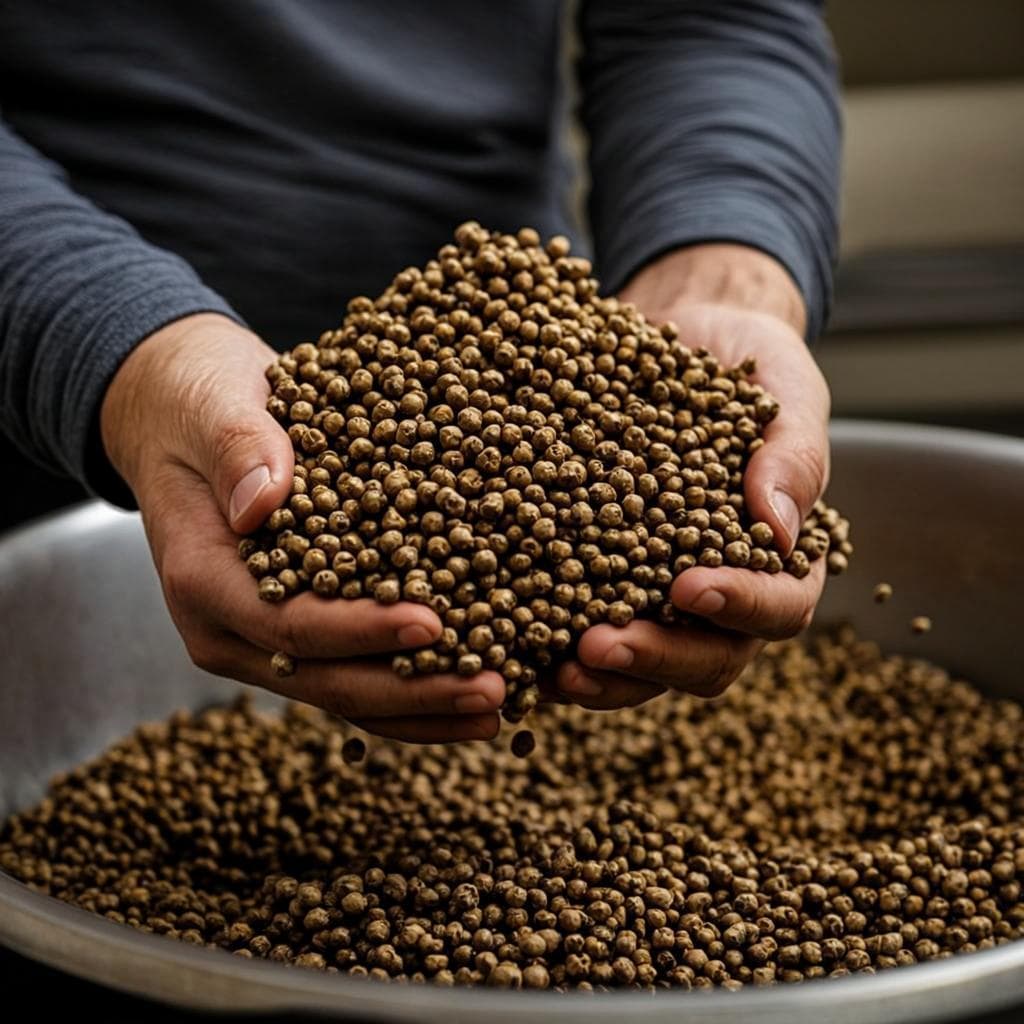
Sample preparation
Collect representative samples following solid biofuel sampling standards — proper size reduction and homogenization before submission.
Sample size
Minimum 2 kg per complete analysis package, with additional material retained for repeat verification if required.
Storage & transport
Airtight containers, clearly labelled, transported within 48 hours to preserve moisture integrity.
Documentation
Source, collection date, storage history and intended application — the context that makes results actionable.
Results you can take to an engineer — or a lender.
Every report closes the loop between measurement and decision.
- 01Detailed analytical results with measurement uncertainty
- 02Fuel quality assessment against thermal conversion requirements
- 03Gasification suitability evaluation
- 04Environmental impact indicators
- 05Comparative analysis against reference fuel benchmarks
- 06Technical consultation on the results and next steps
Before you send a sample.
Following our sample guidelines: a representative sample of at least 2 kg of solid fuel, sealed airtight, delivered to the laboratory within 48 hours and accompanied by basic documentation of origin and handling. Representative sampling matters more than quantity — a perfect analysis of an unrepresentative sample is a wrong answer.
Proximate analysis (moisture, ash, volatiles, fixed carbon), ultimate analysis (C/H/N/S/O), calorific value (GCV/NCV) and ash behaviour — fusion temperature, composition and slagging/fouling indices. Together they determine whether a fuel can be converted reliably and what the plant must be designed to handle.
Yes. Results are reported with measurement uncertainty and assessed against thermal conversion requirements — the deliverable is a process-relevant conclusion, not just a data sheet.
That is what the data is for. As vendor-neutral consultants we translate results into technology screening and design decisions — and we tell you honestly if a fuel does not support the concept you had in mind.
Next step
Unknown fuel?
Put it on the bench first.
Send us your sample requirements and application context — we will define the right analysis package before you spend on anything larger.